From Tokyo Stalls to Texas Strip Malls: How Ramen Quietly Became America's Favorite Bowl
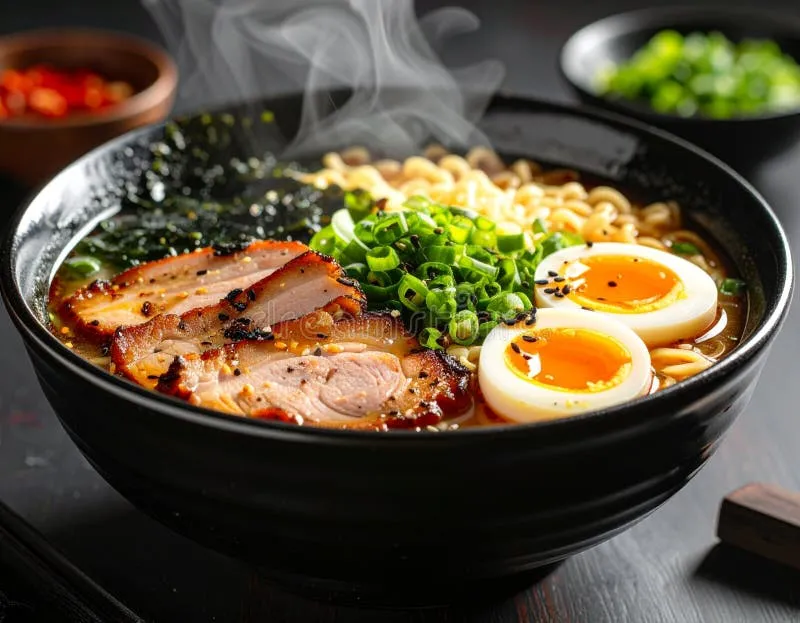
Photo: steaming bowl of tonkotsu ramen with chashu pork and soft boiled egg in restaurant, via thumbs.dreamstime.com
Somewhere between the instant noodle packets of college dorm fame and the $18 tonkotsu bowls now appearing on menus in every major American city, ramen had a glow-up. A serious one. And if you've been paying attention to the food scene over the last decade or so, you already know that ramen isn't just trending — it's arrived. It's entrenched. It's not going anywhere.
But how did a dish born from post-war Japanese necessity become the signature comfort food of a new American generation? And more importantly, what does it say about where American dining culture is headed?
At Freeman's, we've been thinking about this a lot. It's kind of our thing.
A Quick History Lesson (Bear With Us)
Ramen's origin story is messier and more interesting than most people realize. The dish is often traced to Chinese wheat noodle soups introduced to Japan in the late 19th century, but it was the post-World War II era — when American wheat imports flooded Japan and food was scarce — that turned ramen into a national staple. Cheap, filling, and deeply satisfying, it spread through street carts and small shops across the country before eventually codifying into the regional styles Japan is now famous for: the rich, pork-bone tonkotsu of Fukuoka; the soy-forward shoyu ramen of Tokyo; the miso-based bowls of Sapporo; the salt-seasoned shio ramen of Hakodate.
Every region has its identity. Every shop has its secret. Ramen culture in Japan is, in a word, serious.
That seriousness — that obsessive, craft-driven approach to a single dish — is a big part of what resonated when it started landing in the United States.
Why America Was Ready
American food culture has always had a complicated relationship with comfort. We love it, we crave it, and we're increasingly willing to pay for elevated versions of it. Think about the arc of the burger: from fast food staple to artisan obsession. Or fried chicken, or tacos. Americans have a pattern of taking something familiar and beloved and demanding it be done better, more carefully, with more intention.
Ramen fit right into that pattern.
When the first serious ramen-ya started opening in Los Angeles and New York in the early 2000s — places like Daikokuya in LA's Little Tokyo and later Ippudo's US debut in Manhattan — they weren't just serving noodle soup. They were introducing Americans to the idea that a bowl of broth could be a 12-hour labor of love. That noodles could be custom-milled to a specific thickness and alkalinity. That toppings weren't afterthoughts but carefully considered components.
For a food culture that was simultaneously falling in love with farm-to-table dining and chef-driven casual concepts, this was catnip.
The Fusion Factor
Here's where things get really interesting — and a little divisive, depending on who you ask.
As ramen took root in American cities, chefs started playing. Nashville hot chicken ramen. Birria ramen with consommé broth and Oaxacan cheese. Smoked brisket ramen in Austin. Lobster ramen in Boston. Vegan ramen with cashew-based tonkotsu in Portland (of course).
The purists winced. And honestly, fair enough — there's something worth protecting about a 70-year-old regional recipe perfected over generations. But here's the thing: ramen has always evolved. It crossed from China to Japan and transformed. It absorbed regional ingredients and local tastes. The dish itself is a story of adaptation.
American fusion ramen, at its best, is just the latest chapter of that story.
At Freeman's, we'd argue the best fusion ramen isn't trying to replace the original — it's in conversation with it. A smoked brisket chashu isn't pretending to be Hakata-style tonkotsu. It's a Texas cook saying, I understand what this dish is doing, and here's how my pantry responds to that. That's not disrespect. That's dialogue.
The Broth is the Message
One of the reasons ramen translates so well across cultures is that its central element — broth — is a universal love language. Every food tradition in the world has a deeply flavored, slow-cooked stock at its heart. French consommé, Vietnamese pho, Mexican birria, Southern pot liquor. Humans are wired to find comfort in a good bowl of broth, and ramen's broths are among the most complex and satisfying ever developed.
Tonkotsu, in particular, has a kind of visceral impact on first-time drinkers. That milky, collagen-rich, almost creamy pork bone broth doesn't taste like anything else in the Western food canon. It's simultaneously familiar (it's savory, it's warm, it's rich) and completely new. That combination of comfort and novelty is a powerful thing at a restaurant table.
What the Ramen Boom Tells Us About American Dining
The ramen wave isn't just about noodles. It's a signal about where American diners' heads are at.
We're less interested in formal, aspirational dining than we used to be. We want food that's generous and unpretentious but still crafted with care. We want to sit at a counter, hear the kitchen, smell the broth, and eat something that took real skill to produce without paying fine-dining prices or observing fine-dining etiquette.
Ramen shops, almost by design, deliver exactly that. The counter seating, the focused menus, the open kitchens — it's a dining format that feels both democratic and special. You're not dressing up. You're not performing. You're just eating something really, really good.
That ethos maps directly onto what we're building at Freeman's Shokudo. The intersection of Japanese comfort culture and American appetite isn't a compromise between two things — it's a recognition that both traditions, at their core, are chasing the same feeling. A full belly, a warm room, and a bowl that makes the day feel a little more manageable.
Where It Goes From Here
The ramen scene in America is still maturing. Regional chains are expanding. Neighborhood spots are getting more ambitious. And a new generation of Japanese-American chefs — people who grew up eating both tonkotsu and Texas barbecue — are bringing a fluency to the form that's genuinely exciting.
We're not at peak ramen. Not even close.
If anything, the most interesting bowls are still being invented — in food halls in Houston, in pop-ups in Chicago, in the home kitchens of people who got hooked on a bowl they had once and have been chasing it ever since.
That's the thing about a great bowl of ramen. It stays with you. And in America, that's usually how a food revolution starts.