Ketchup Rice, Meet Silk: How Omurice Went From Meiji Curiosity to Brunch Line Star
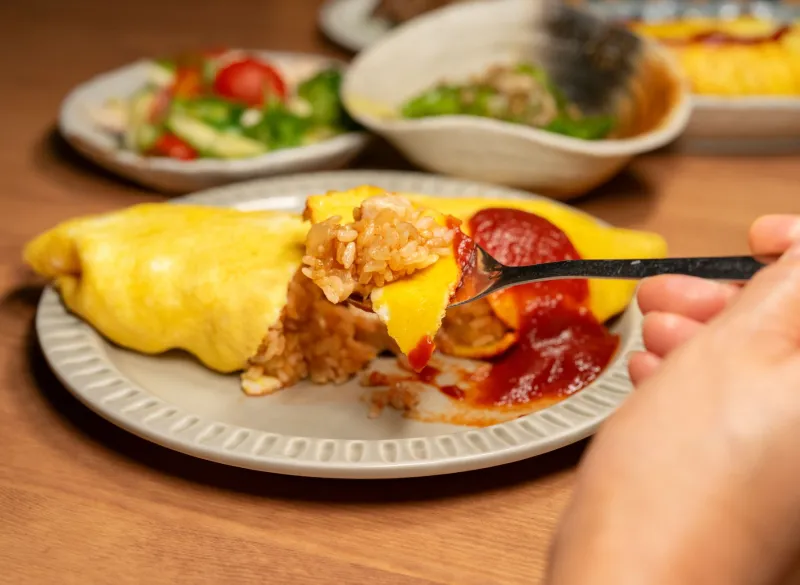
Somewhere between the avocado toast and the biscuit sandwich on brunch menus across America, a new star has quietly taken a seat: omurice. If you've scrolled TikTok in the past year, you've seen it — a knife slicing down the middle of a pillowy, golden omelet that splits open like a curtain to reveal a mound of ketchup-glazed rice underneath. The videos rack up millions of views. The restaurants serving it, from Portland to Brooklyn, have lines out the door.
But omurice isn't some viral invention. It's a century-old Japanese comfort food with a surprisingly complicated relationship with the West — and understanding that story makes the first bite taste even better.
A "Western" Dish That's Purely Japanese
Omurice was born during the Meiji era, when Japan opened its doors to Western influence and a whole genre of cooking called yoshoku — "Western food" — took off. But here's the twist: yoshoku dishes weren't copies of European cooking. They were Japanese interpretations of it, filtered through local tastes and ingredients.
The name says it all. Omu comes from "omelet," rice is, well, rice. The classic version is simple: chicken and rice sautéed together, seasoned generously with ketchup, then wrapped in a thin, tender omelet and finished with a zigzag of more ketchup on top. Ketchup, a novelty ingredient in early 20th-century Japan, became the flavor backbone of the dish — a sweet-tangy shortcut to "Western-ness."
For generations, omurice was the kind of food Japanese kids begged their moms to make. It showed up in anime, in family restaurants, in school lunches. It was never fancy. It was home.
The Tornado Effect
So why is it suddenly everywhere in the States? Blame — or thank — the tornado omurice.
The viral version, popularized by Kyoto restaurants like Kichi Kichi and chef Motokichi Yukimura, involves a loose, jiggly omelet cooked just until barely set, then slashed open at the table so it drapes dramatically over the rice like molten silk. One perfectly timed cut, one slow-motion ooze, one phone camera pointed at the plate — and a century-old comfort food becomes a global spectacle.
American brunch spots took note. What started as a novelty performance dish is now showing up on legit menus, often with local twists: gochujang instead of ketchup, short rib fried rice, truffle oil drizzles. Purists may wince, but that's kind of the yoshoku spirit — take something foreign, make it yours, don't apologize.
Why It Works So Well Here
Omurice hits a very American sweet spot: it's essentially a loaded fried rice wrapped in what amounts to the world's softest scrambled eggs. It's nostalgic without being precious, indulgent without being heavy, and it photographs like a dream. It's comfort food that performs.
There's also the ketchup factor. Americans keep a bottle in the fridge door, which means the barrier to entry is basically zero. No specialty shopping required — though a splash of soy sauce and a pat of butter will get you remarkably close to the depth of flavor Japanese home cooks achieve.
Make It Tonight: The Foolproof Home Version
Here's the roadmap. Don't overthink it — omurice is supposed to be easy.
The rice: Cook day-old rice (or leftover takeout rice) with diced chicken thigh, onion, and a squeeze of ketchup plus a teaspoon of soy sauce. Season boldly — the omelet is mild, so the filling should carry the flavor. Let it cool slightly.
The omelet: Whisk three eggs with a splash of milk and a pinch of salt. Heat a nonstick pan with butter over medium-low — this is the key to the silk texture. Pour in the eggs and stir gently, pulling the curds toward the center while tilting the pan, stopping while the eggs are still slightly loose and glossy.
The assembly: Shape your rice into a mound on a plate. Slide the omelet on top, then make one confident lengthwise cut down the center so it spills open over the rice. Finish with ketchup — a drizzle, or go full retro with a zigzag.
Pro tips:
- Slightly undercook the eggs. Residual heat finishes the job, and the loose center is what creates that dramatic drape.
- If your omelet tears, don't panic. Cover it with ketchup. Nobody will ever know.
- Leftover rice is your friend. Fresh rice turns mushy.
Omurice was never meant to impress anyone. It was meant to comfort someone — and right now, that someone appears to be all of us. Fire up the pan, grab the ketchup, and see what a hundred years of Japanese home cooking tastes like on a Tuesday night.