Sunday Prep, Friday Night: How One Batch of Staples Pulls Double Duty All Week
There's a moment every Sunday afternoon — somewhere between the grocery haul and the dread of Monday — when a batch-cooking session feels less like a chore and more like an insurance policy. And if you're going to spend two hours in the kitchen anyway, you might as well set yourself up for two entirely different weeks of eating: the composed, balanced lunch set meal that gets you through Wednesday, and the salty, snacky, sake-friendly chaos of Friday night.
The Japanese kitchen is quietly built for this exact duality. The same components that make up a proper teishoku — a set meal with rice, soup, protein, pickles, and vegetables — are the same ones that fill the little plates at an izakaya. Nothing new gets cooked. It just gets re-staged.
The Five Components You Actually Need
Here's the full roster. Everything on this list keeps for days and pulls its weight in both formats:
- A big pot of plain steamed rice. Not seasoned, not fried. Just good short-grain rice, cooked properly. It's the anchor of lunch and the base of late-night onigiri or rice balls split between friends.
- A miso-marinated protein. Chicken thighs are the workhorse here, but firm tofu or thick-cut salmon work too. Two days in a miso marinade and it's ready to pan-sear or broil whenever.
- Quick pickles. Cucumbers, daikon, or cabbage in a light brine of rice vinegar, salt, and a pinch of sugar. Thirty minutes of hands-off time, a week of crunch.
- Two simmered vegetables. Think kabocha squash and green beans, or daikon and carrots, gently simmered in dashi with soy and mirin until glossy and tender.
- A miso soup base. Not the finished soup — just good dashi and a tub of miso paste nearby. Assembly takes ninety seconds whenever you want it.
That's it. Five things, one afternoon.
The Sunday Timeline
Don't be a hero — sequence the work so nothing overlaps awkwardly:
- Hour one: Get the rice going. While it cooks, salt the cucumbers for pickles and get the protein into its miso marinade (it needs at least overnight, so this is non-negotiable today). Simmer your dashi and stash it in quart containers.
- Hour two: Simmer the vegetables while the pickles press. Wash rice pots, wipe down, taste everything, adjust. Done.
The whole thing costs you about two hours, most of it passive, and you'll eat off it for five days.
Weekday Mode: Teishoku Rules
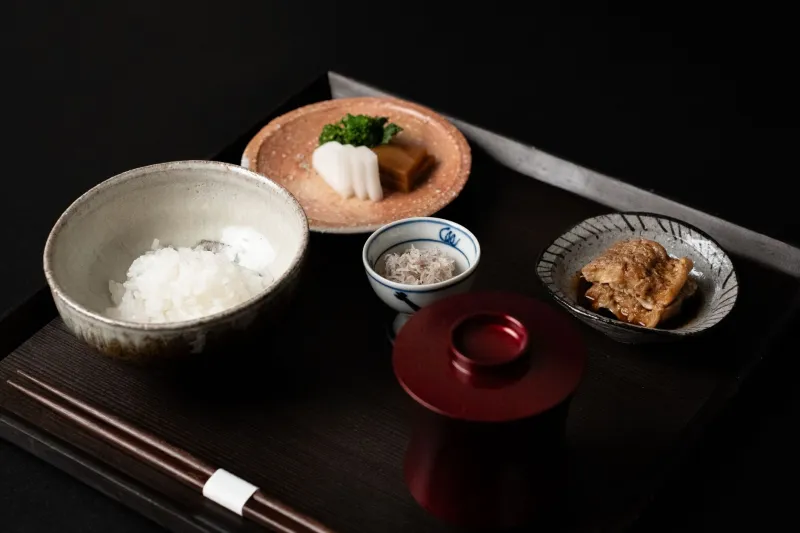
A set meal is all about proportion and placement. Rice on the left, soup on the right, protein across from the rice, pickles tucked at the top. It sounds fussy but it takes thirty seconds, and the ritual genuinely makes a Tuesday lunch feel like something you chose rather than something you microwaved.
Portioning matters too. Teishoku is modest by design: a palm-sized piece of the miso chicken, a small mound of simmered squash, a few pickle spears, a bowl of rice. Balanced without trying. If you've got the dashi and miso staged, the soup is a non-issue — reheat dashi, whisk in miso off the heat, drop in a cube of tofu. Ninety seconds, start to finish.
Friday Mode: Everything Gets a Second Career
Now the fun part. Friday night, the same fridge contents go full izakaya:
- The miso chicken, sliced thin and served at room temperature on a small plate with a squeeze of lemon and a smear of spicy mayo, becomes a drinking snack. Cut it smaller than you think you should — izakaya plates are about grazing, not entrees.
- The pickles move from side dish to centerpiece. Pile them in a little bowl, dust with shichimi togarashi, put them next to the cold beer. Pickles and beer is a partnership older than either country's bar scene.
- The simmered vegetables get chopped small, tossed with leftover rice, and fried hard in a screaming-hot pan. Day-old rice is the whole point here — it fries better than fresh.
- The rice itself gets pressed into onigiri, brushed with soy, and crisped directly on the stovetop or under the broiler until the edges char. Yaki onigiri: three ingredients, zero mercy, gone in four minutes.
The shift is mostly psychological. Same food, different plates, smaller portions, louder company.
Why This Works (Beyond Just Saving Time)
Japanese home cooking has always run on this logic — components, not recipes. You cook staples once and recombine them all week, which is why a Japanese grandmother's fridge looks deceptively plain and yet dinner appears in minutes. The teishoku-by-day, izakaya-by-night split just makes that system visible.
It also fixes the classic batch-cooking failure mode, which is boredom. Nobody wants the same plastic container of chicken and rice four days running. But a set meal on Monday, a rice bowl with a fried egg on Wednesday, and charred onigiri with friends on Friday? That's three different meals wearing the same groceries.
So this Sunday, skip the twelve-recipe meal-prep fantasy. Cook five things. Feed yourself properly all week, then let the fridge throw the party on Friday.