One Pan, Infinite Possibilities: How Okonomiyaki Became the Weeknight Dinner We Didn't Know We Were Missing
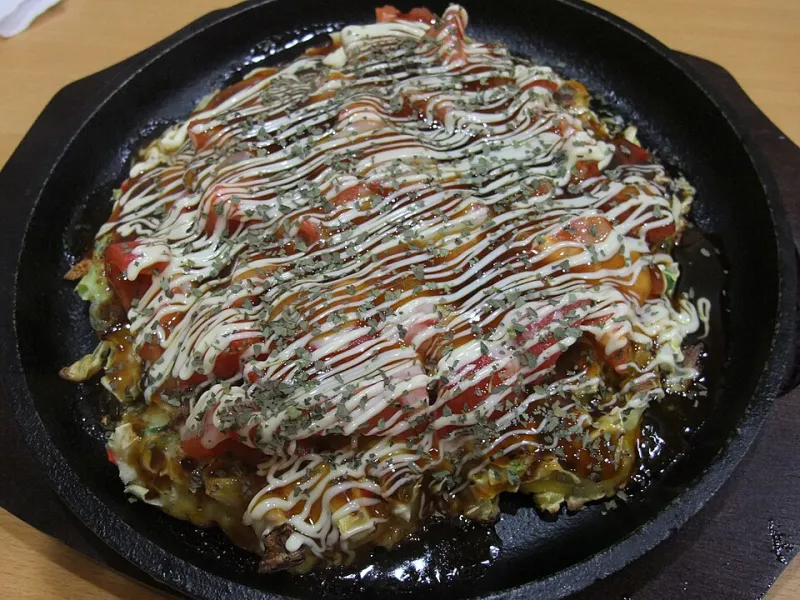
Photo: pelican from Tokyo, Japan, CC BY-SA 2.0, via Wikimedia Commons
There's a particular kind of weeknight panic that hits around 6:30 p.m. You've got half a cabbage, some leftover bacon, a few eggs, and absolutely zero motivation to make anything complicated. In Japan, this is not a crisis. This is okonomiyaki night.
Okonomiyaki — loosely translated as "grilled as you like it" — is Japan's answer to the question nobody in America thought to ask: what if a pancake had ambition? It's savory, crispy on the outside, tender and almost custardy within, and built entirely around the idea that you use what you've got. That philosophy fits right in here at Freeman's Shokudo, where Japanese comfort food and American pantry reality share the same table.
The Two Versions Worth Knowing
Before you fire up the skillet, it helps to know that okonomiyaki isn't one thing — it's at least two, and the regional rivalry between them is deeply sincere.
Osaka-style (also called Kansai-style) is the one most American home cooks will encounter first. Everything gets mixed together into a single batter: shredded cabbage, eggs, a bit of flour, dashi or water, and whatever protein you're working with. It cooks as one cohesive round, like a thick savory pancake. It's forgiving, fast, and endlessly adaptable.
Hiroshima-style is a different beast entirely. Instead of mixing everything together, it's assembled in layers — batter, cabbage, protein, and often yakisoba noodles — stacked and cooked with more patience and precision. The result is taller, more complex in texture, and genuinely impressive if you've got the time. It's a weekend project rather than a weeknight save.
For our purposes — and honestly for most home cooks starting out — Osaka-style is where you want to begin.
The Batter Situation (It's Simpler Than You Think)
Traditional okonomiyaki batter calls for a specific Japanese flour blend called okonomiyaki ko, which includes yam powder and gives the pancake its signature bounce. You can find it online or at Asian grocery stores, but you absolutely don't need it to make something excellent.
A basic at-home version works like this:
- 1 cup all-purpose flour
- ¾ cup dashi stock (or regular chicken or vegetable broth — even plain water works in a pinch)
- 2 eggs
- 2 cups shredded green cabbage (about a quarter of a small head)
- 2 green onions, sliced
- Salt to taste
Whisk the flour, liquid, and eggs into a smooth batter, then fold in the cabbage and green onions. The cabbage-to-batter ratio should feel like there's almost too much cabbage. That's correct. Don't second-guess it.
If you want to get closer to the real thing, stir in a tablespoon of grated nagaimo (Japanese mountain yam) if you can find it — it adds a subtle stickiness that makes the interior almost impossibly light. If not, don't stress.
Protein: Use What's Already in Your Fridge
This is where okonomiyaki really earns its weeknight credentials. The traditional topping is thin-sliced pork belly, laid across the top of the batter right before you flip it. It crisps up and essentially fuses into the pancake. It's incredible.
But here's the thing: bacon works just as well. Regular American bacon, cut into pieces and pressed into the top of the batter, delivers almost the same result. Beyond that, the door is wide open:
- Shrimp (fresh or frozen-thawed, cut into bite-size pieces)
- Leftover rotisserie chicken, shredded
- Kimchi, roughly chopped, mixed right into the batter
- Canned tuna, drained (this sounds odd; it's genuinely great)
- A combination of whatever — okonomiyaki doesn't judge
Vegetarians can skip the protein entirely and lean into extra vegetables. Corn, shredded carrot, sliced mushrooms, and even cubed firm tofu all work beautifully.
Getting the Flip Right
The flip is where most first-timers panic. Here's how to avoid catastrophe:
Use a medium-large nonstick skillet or a well-seasoned cast iron pan. Heat it over medium — not high. Add a thin layer of neutral oil, pour in your batter (about an inch thick), and resist the urge to press it down. Let it cook undisturbed for four to five minutes until the edges look set and the bottom is deeply golden.
Then: slide a wide spatula underneath, place a second spatula or a flat plate on top, and flip in one confident motion. Hesitation is the enemy. Cook the second side for another three to four minutes. The center should feel firm but not rigid when you press it gently.
The Sauce Situation: Non-Negotiable
An okonomiyaki without its toppings is like a hot dog without condiments — technically fine, but missing the point. The classic setup is:
- Okonomiyaki sauce: Thick, sweet, and tangy, similar to a richer Worcestershire. Otafuku is the go-to brand and it's easy to find online. In a pinch, mix equal parts ketchup and Worcestershire with a small splash of soy sauce and a little honey.
- Japanese mayo: Kewpie is the gold standard. It's richer and slightly tangier than American mayo, and it makes everything better. Drizzle it in zigzag lines across the top.
- Bonito flakes (katsuobushi): These thin, feather-light flakes dance in the heat rising from the pancake. It's theatrical and delicious.
- Aonori: Dried green seaweed flakes. Optional but worth having.
- Pickled ginger (beni shoga): A small pile on the side cuts through the richness perfectly.
Why This Belongs in Your Weekly Rotation
Okonomiyaki hits a very specific comfort-food frequency that most American weeknight cooking doesn't reach — it's filling without being heavy, endlessly variable without being complicated, and it has the kind of crispy-edged, savory-sweet flavor profile that makes you go back for a second piece before the first one's even finished.
It also comes together in under 30 minutes, uses ingredients that are already in your kitchen, and produces almost no dishes. As weeknight dinners go, the case is pretty much airtight.
Start with the Osaka version, get the flip down, and then start experimenting. Kimchi in the batter. Leftover pulled pork as the protein. A fried egg on top just because. The name literally means "cook what you like." Take it at its word.