Fish, Rice, and a Reason to Wake Up: The Case for Japanese Breakfast as America's Next Brunch Move
Let's be honest about brunch in America. It's a lovely ritual built mostly on sugar, toast, and a Bloody Mary the size of a fire hydrant. And we love it. But somewhere between the third stack of French toast and the avocado toast that costs more than a utility bill, a quiet question has started creeping onto menus from Los Angeles to Brooklyn: what if breakfast could actually wake you up?
Enter the teishoku breakfast — Japan's traditional morning spread, and quite possibly the most satisfying thing you've never ordered before 11 a.m.
What Actually Lands on the Table
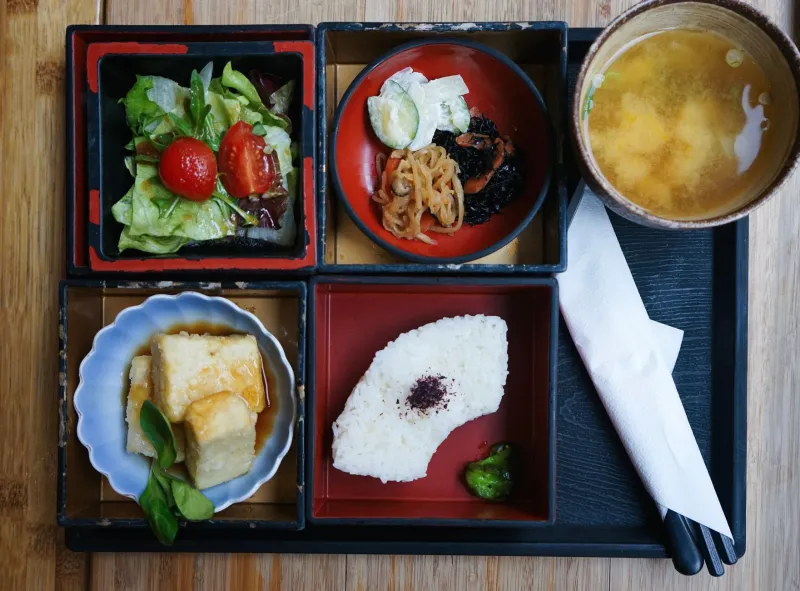
A classic Japanese breakfast isn't one dish. It's a small, orderly lineup:
- Gohan — plain steamed short-grain rice, the anchor of the whole thing
- Shakushimono — a piece of grilled fish, usually salt-cured salmon, mackerel (saba), or horse mackerel (aji)
- Misoshiru — miso soup with tofu and wakame
- Tamagoyaki — a slightly sweet rolled omelet, cooked in layers
- Tsukemono — a few pickles for brightness and crunch
- Natto — fermented soybeans, for the brave (more on that later)
Nothing is huge. Nothing is heavy. But together, the spread hits every note — savory, salty, tangy, a little sweet — and you walk away feeling fed rather than defeated. It's the anti-brunch brunch.
Why It's Having a Moment Here
American diners have spent the last decade training their palates for this exact moment. We embraced ramen. We made donburi a lunchtime staple. Miso-glazed anything is practically a menu cliché at this point. The traditional Japanese breakfast is the natural next chapter — it uses flavors we already trust, just rearranged for the morning.
There's also the wellness angle, which no restaurant operator in 2024 can ignore. A plate of grilled fish, rice, soup, and pickles reads as protein-forward, gut-friendly, and low-sugar without anyone having to say the word "macro" out loud. It photographs beautifully, too — all those little dishes in neat rows are basically engineered for Instagram.
And unlike a lot of wellness food, it actually tastes like something. The salt-grilled salmon has crackly skin. The pickles cut through the richness. The tamagoyaki is soft and faintly sweet, like the world's most sophisticated answer to a scrambled egg.
Who's Already Doing It
The movement is real, even if it's still under the radar. In New York, spots like Kokage and Lafayette Grand Café & Bakery (with its Japanese-leaning morning menu) have pulled breakfast crowds with rice-and-fish sets. On the West Coast, Los Angeles has long been ahead of the curve — places like Ebisu and the morning counters in Sawtelle's Japantown have served grilled fish breakfasts to those in the know for years. In Honolulu, where Japanese food culture runs deep, the tamago kake gohan and saimin breakfasts never went away in the first place.
The pattern you'll notice: the restaurants doing this well aren't chasing a trend. They're either Japanese-owned or Japanese-trained, and they treat breakfast with the same seriousness as dinner. That's the tell. When the rice is actually good rice — seasoned properly, served hot — you've found the real thing.
Build One at Home This Weekend
Here's the good news: you don't need a plane ticket or a specialty haul to do this at home. Most of it comes from a regular grocery store.
The fish. Buy salmon fillets, salt them generously 20–30 minutes before cooking (this is shiojake, and it firms up the flesh beautifully), then broil or pan-sear skin-side down until the skin crisps. Mackerel works too if your store carries it.
The rice. Any short-grain rice — sushi rice, Calrose, whatever's on the shelf. Rinse it, cook it, and resist the urge to add anything to it. Plain rice is the point.
The miso soup. This takes four minutes. Dissolve a spoonful of miso paste into hot dashi (instant dashi granules are completely acceptable and live in most grocery store Asian aisles), add cubed tofu and a pinch of dried wakame. Never boil the miso — it kills the aroma.
The tamagoyaki. Beat three eggs with a teaspoon of sugar and a splash of soy sauce. Pour a thin layer into a nonstick pan, roll it, pour another layer, roll again. A rectangle pan helps, but a regular round skillet works — your first attempt will look rustic. Rustic is fine.
The pickles. Slice a Persian cucumber thin, salt it lightly, let it sit for ten minutes, squeeze dry. Done. If you want to level up, a splash of rice vinegar turns it into quick tsukemono.
Assemble everything in small dishes, serve it all at once, and eat while everything's hot. Green tea on the side if you have it. Coffee is also allowed — nobody's checking.
A Note on Natto
If you've never had natto — sticky, stringy fermented soybeans with a funk that announces itself — treat it like a trust exercise. Mix it with a little soy sauce and mustard, pile it on rice, and see where you land. Some people become devotees on day one. Others need a few weekends. Both outcomes are normal.
The Bottom Line
American brunch isn't going anywhere, and thank goodness. But the teishoku breakfast offers something our weekend tables have been missing: a morning meal that leaves you energized instead of napping on the couch by 2 p.m. It's cheap, it's fast once you've done it twice, and it turns an ordinary Saturday into a small occasion.
So this weekend, skip the waitlist at the pancake place. Salt some fish, steam some rice, roll an omelet. Your 10 a.m. self will wonder what took you so long.