Pull Up a Stool: The Case for Abandoning Your Booth and Eating at the Counter
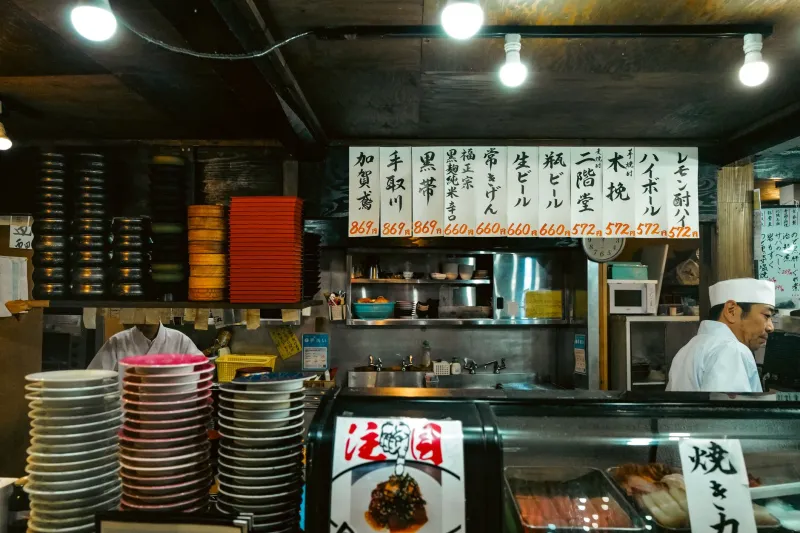
There's a moment that happens at every good sushi counter, and if you've never sat at one, you've never seen it. The chef catches your eye, tilts his head slightly toward the rice barrel, and you nod. Thirty seconds later, a piece of seared salmon lands in front of you, still warm, seasoned for exactly this moment, for exactly you. No ticket spike. No food runner. No 'who had the spicy roll?'
Meanwhile, most of us default to the booth. We book the four-top by the window because it feels safe, because we can spread out, because nobody has to make small talk. And look — there's nothing wrong with a booth. But if that's the only way you eat out, you're ordering dinner when you could be having an experience.
The Kitchen Is the Show, So Buy a Front-Row Seat
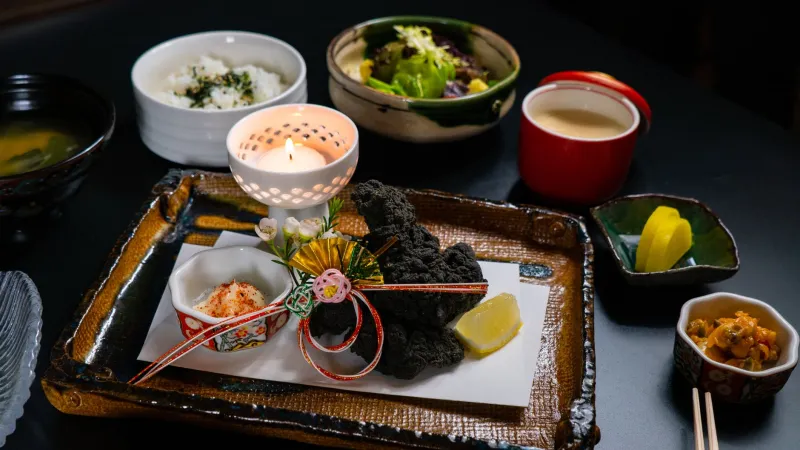
Think about how Japanese restaurants are built. The counter isn't an afterthought squeezed against a wall — it's the center of the room, with the kitchen as the stage. At a tempura counter, you watch batter hit oil and puff into gold within arm's reach of your seat. At a yakitori spot, the grill man fans charcoal and brushes tare onto skewers in a rhythm so steady it's basically meditation.
This isn't just entertainment. It changes the food. When a chef hands you a piece of nigiri directly instead of sending it down a line, the rice is body temperature instead of fridge temperature. When tempura arrives sixty seconds after it leaves the oil, the crust actually crackles. Counter dining isn't a vibe — it's a freshness upgrade you can taste.
American restaurants have caught on. Omakase counters are opening in strip malls in Dallas and Denver. Tempura bars are popping up in Brooklyn. The format is spreading precisely because it delivers something a booth can't: a direct line to the person cooking for you.
The Etiquette, Demystified
I think part of what scares people off is the unwritten rules. So let's write some of them down.
Don't bury your face in your phone. You don't have to make conversation all night, but a counter chef reads his guests. If you're scrolling, he'll assume you want to be left alone — and you'll miss the moment he slides you a piece of something that isn't on the menu.
Let the chef drive. At sushi counters especially, ordering 'omakase' or simply saying 'chef's choice, start me with anything' signals trust. If you have allergies or hard no-gos, say so once, up front, then let go of the wheel.
Eat what lands in front of you, promptly. Counter courses often arrive one at a time, timed deliberately. Let the tempura sit for ten minutes while you finish your cocktail and you've wasted the chef's best work.
Ask questions — just read the room. 'What is that?' during a lull is welcome. Grilling the sushi chef about his rice vinegar ratio mid-service, with six seats occupied behind you, is not.
Tip like you would anywhere in America. Counter service doesn't mean the customs change.
How to Actually Get the Seat
Counters are small — often eight to twelve stools — so a little strategy helps.
- Book the counter specifically. Many reservation systems lump all seating together. Call or note 'counter seating' in your reservation, or use apps that let you request bar seats.
- Go early or go late. The first seating, right at open, is your best shot at a relaxed chef with time to chat. Late on a weeknight works too.
- Solo diners, this is your superpower. One person can almost always squeeze into a single stool on a Friday when tables are booked solid. Counter dining is also simply the best way to eat alone in public — you're never really alone when there's a chef narrating the menu two feet away.
- Skip the big group. Counters reward pairs and solos. Save the birthday party of nine for the table.
Ordering Without Fear
Worried you'll embarrass yourself? Nobody at a good counter is keeping score. A few phrases do a lot of work:
- 'Chef's choice' — the magic words at sushi and tempura counters.
- 'What's good tonight?' — an invitation for the chef to steer you toward whatever just came in that morning.
- 'I'll follow your lead' — works at yakitori, where skewer order (lighter cuts first, richer ones later) actually matters.
And if you're at a Japanese counter and want to nod along, a small vocabulary helps: omakase means 'I'll leave it up to you,' okawari means 'another one, please,' and gochisosama as you leave — 'thanks for the feast' — will earn you a genuine smile on the way out.
Forty-Five Minutes Becomes an Evening
Here's the thing about counter dining: it slows food down in the best way. A table dinner can be over in forty-five minutes — order, eat, check, gone. A counter meal unfolds. Courses arrive as they're ready. The chef tells you where the fish was swimming yesterday. You end up talking to the stranger on the next stool about the charcoal they're using. Two hours disappear.
That's the trade: a little less privacy, a little less elbow room, in exchange for a meal with a narrator. The booth will always be there. The stool in front of the grill won't.
So next time you walk into that new sushi spot or the yakitori place your coworker won't stop talking about, do one thing differently. Skip the hostess's pen and paper for the four-top. Point at the counter and say, 'Actually — can we sit there?'
Then watch what happens to dinner.