The Secret Life of the Teishoku Tray: Why Everything on Your Plate Has a Seat Assignment
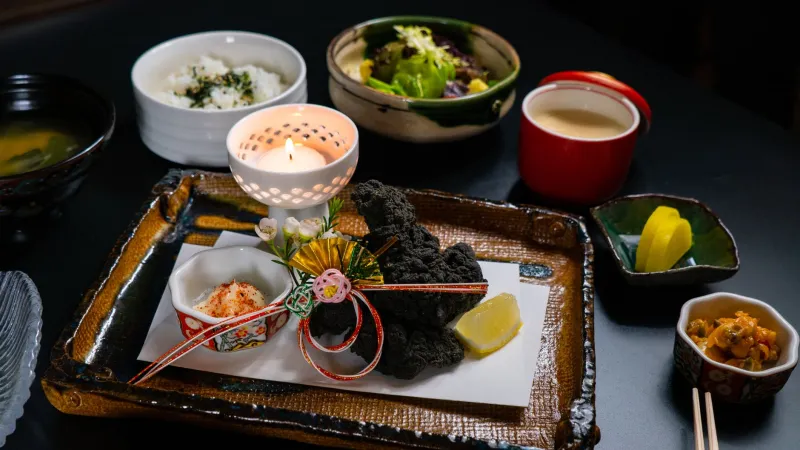
Walk into any neighborhood teishoku spot in Tokyo — the kind of place with eight stools and a steam-veiled window — and your lunch will arrive looking like it was placed by a surveyor. Rice at the lower left. Miso soup tucked at the lower right. Grilled fish up top, pickles standing guard in a small dish beside them. Nothing touches. Nothing is accidental.
American diners tend to read this as fussiness. It's actually closer to grammar. The Japanese set meal follows a spatial language that's been refined over generations, and once you learn to read it, you can't unsee it. Better yet, you can start speaking it at home.
The Basic Sentence Structure
The classic arrangement is called honzen style at its most formal, but the everyday version most of us encounter follows a simple logic: rice left, soup right, main behind, pickles beside.
Why does it matter which side? Rice, the foundation of the meal, traditionally goes on the left — historically the side of honor. Soup on the right means a right-handed diner can alternate naturally: a bite of rice, a sip of soup, without reaching across the tray. The main dish — fish, tonkatsu, simmered vegetables — sits at the top center like a headline, with pickles and smaller sides flanking it as supporting text.
It's ergonomics dressed up as ceremony. Your hand travels the shortest possible distance. The meal is designed to be eaten in rhythm, not in piles.
The Pickle Guards the Corner
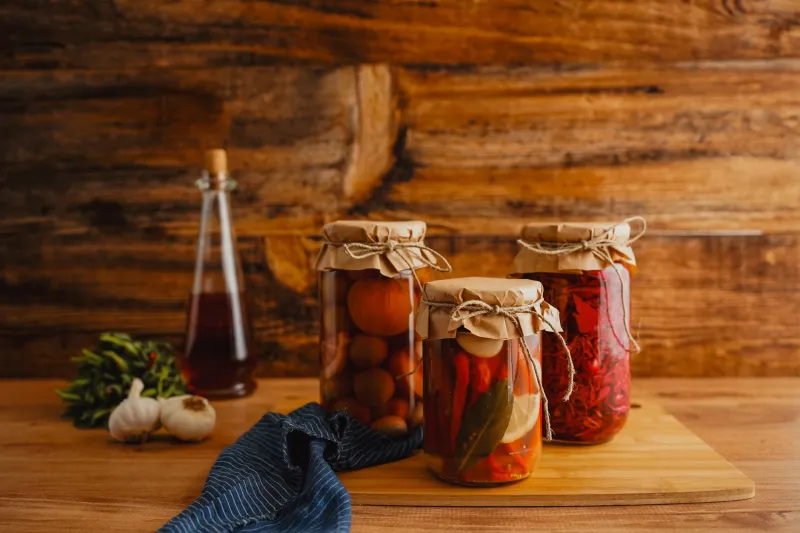
Tsukemono, those bright little pickles, almost always land in the corner or beside the rice, and that placement is doing real work. Pickles are palate resetters — a sharp bite of cucumber or turnip between mouthfuls of rich fish or fried food keeps flavors from muddying. Positioning them at the edge of the tray makes them easy to reach but impossible to ignore.
Think of them as the reset button. In an American context, it's the same reason a steakhouse gives you a little relish tray, except Japan made it a rule and a philosophy.
The Hidden Nutrition Math
Here's where the tray gets quietly brilliant. The traditional teishoku framework — often described as ichiju sansai, one soup, three dishes — is effectively a built-in portioning system. Grain at the base, protein in moderation, vegetables in multiple preparations, something pickled or fermented. Nobody counts calories at a teishoku counter. The geometry does the counting.
Compare that to the American plate, where the entrée dominates and sides are afterthoughts. The teishoku tray distributes real estate evenly. Nothing is a supporting actor; everything is portioned to finish together. That's a big part of why these meals feel satisfying without being heavy — variety and balance trick your brain into feeling like it got a full experience, because it did.
What the Layout Says About Hospitality
There's also a relational layer. In formal Japanese dining, dishes are placed with the guest's perspective in mind — the most beautiful face of the fish turned toward you, the handle of the soup bowl angled for easy lifting. The tray is arranged for the eater, not the cook.
That's the quiet hospitality lesson: plating isn't about showing off. It's about anticipating the person on the other side of the table. A home cook who angles a plate, wipes the rim, and sets the rice where a hand will naturally fall is doing the same thing a Tokyo counter chef does. It costs nothing. It changes everything.
Stealing the Grammar for Your Own Table
You don't need lacquer trays or a set of matching dishes. You need the underlying rules:
- Anchor with a starch. Give rice, noodles, or bread a fixed position — the lower left if you want the full tradition. It becomes the meal's home base.
- Add liquid in a small vessel. Soup, even a quick miso or a light broth, on the opposite side. It forces pacing and adds warmth.
- One main, treated like a headline. A modest portion of protein, presented deliberately, not buried under sauce.
- Two small sides, not one big side. A blanched vegetable and something dressed. Variety beats volume.
- Something sharp at the edge. Pickles, a vinegar-dressed slaw, quick-pickled radish. The corner guard.
Try it once with a Tuesday dinner — grilled salmon, rice, miso from the tub in your fridge, some cucumber pickles you make in ten minutes. The meal will taste different, even though the ingredients didn't change. That's the trick of the tray: it doesn't just organize food. It organizes attention.
Why This Travels
The teishoku tray survives because it solves problems Americans are actively trying to solve: balanced eating without calorie math, portion control without measuring cups, and a dinner table that feels intentional in an age of eating over the sink. The format is flexible enough to hold fried chicken and coleslaw as easily as fish and tsukemono.
The seat assignments aren't rigid tradition for tradition's sake. They're a hundred years of usability testing, served on a tray. Learn the grammar, and your plate starts speaking a calmer, more generous language — one bite, one dish, one corner at a time.