Swap the Fondue Pot for Shabu-Shabu: A Holiday Dinner Party That Cooks Itself
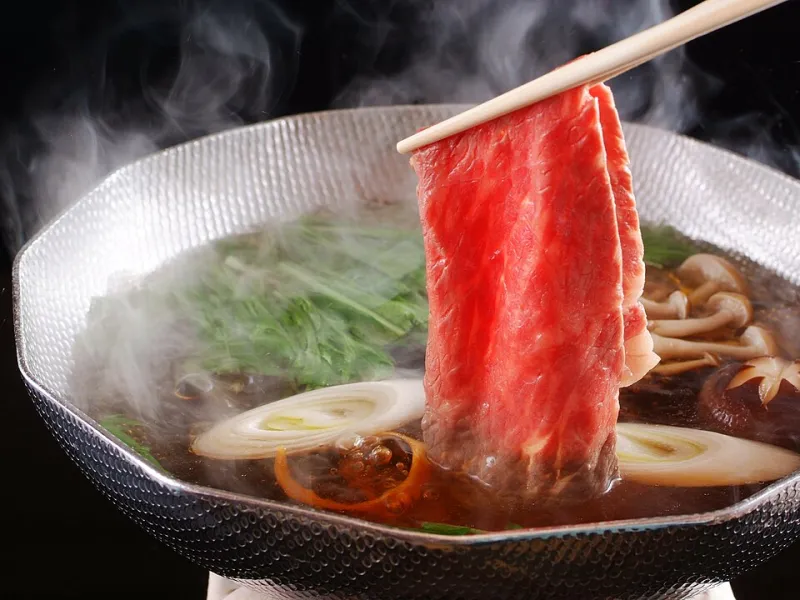
Photo: Nishimuraya Kinosaki Onsen, CC BY 2.0, via Wikimedia Commons
Every holiday season, someone digs out the fondue pot. It is a nice idea: a pot of melted cheese, a platter of bread, a table full of people poking at their food. But by the second round, the cheese has seized up, the bread is gone, and everyone is quietly wishing there were vegetables. This year, consider a different pot. Shabu-shabu is the Japanese hot pot dinner that asks guests to cook their own food, and somehow that makes the whole party easier.
Why Shabu-Shabu Wins the Dinner Party
Fondue is a performance. Shabu-shabu is a rhythm. You bring a pot of dashi to a simmer, set out plates of thinly sliced beef or pork, vegetables, tofu, and noodles, and let people cook what they want, when they want. The meat swishes through the broth for a few seconds. The vegetables take a little longer. The broth gets richer as the meal goes on. There is no timing stress, no crowded oven, no last-minute panic. The table does the work.
It also handles a crowd better than fondue. Picky eaters can skip the mushrooms. Vegetarians can load up on tofu and cabbage. Someone who does not eat beef can use pork or keep it meatless. The pot stays hot, the plates stay full, and the conversation keeps moving. For a 2026 holiday dinner, that is a better kind of interactive.
The Setup: One Pot, One Burner, Many Hands
You do not need special equipment. A wide, shallow pot works best, ideally with a portable induction burner or a hot plate set in the middle of the table. A Dutch oven on a portable electric burner is fine. So is an electric skillet with a deep well. The key is a steady simmer, not a rolling boil. A rolling boil will toughen the meat and cloud the broth.
Set the table with small plates, chopsticks or forks, and a few tongs or strainers. Give each guest a small bowl for dipping sauce. Keep a separate plate for raw meat and another for cooked food. Food safety matters here: raw meat should not touch the vegetables or the dipping bowls. Use one set of tongs for raw meat and another for cooked food.
The Broth: Dashi Is Your Friend
Shabu-shabu broth is not a heavy stew. It is a light, savory dashi that lets the meat and vegetables speak for themselves. Make it with kombu and bonito flakes if you have them. Soak a piece of kombu in cold water for twenty minutes, bring it to a bare simmer, remove the kombu, and add a handful of bonito flakes. Turn off the heat, let the flakes settle, and strain. Or use instant dashi powder, which is honest and fast. Add a splash of sake or mirin if you like, but keep it light. A little soy sauce can go in, but not too much. The dipping sauces will do the heavy seasoning.
The Meat and the Math
The meat is the star, and it needs to be thinly sliced. Look for beef ribeye or pork loin sliced for shabu-shabu at an Asian grocery store. If you are slicing it yourself, put the meat in the freezer for twenty minutes, then use a sharp knife to cut it as thin as you can. You want slices that cook in ten to fifteen seconds. A pound and a half of meat will feed four people comfortably, especially with plenty of vegetables and a noodle course at the end.
The Dipping Sauces: Ponzu and Sesame
Two sauces are enough. Ponzu is citrusy, salty, and bright. Goma dare is creamy, nutty, and rich. You can buy both at most Asian grocery stores, and there is no shame in that. If you want to make ponzu, combine soy sauce, lemon or yuzu juice, rice vinegar, and a little sugar. For sesame sauce, whisk together toasted sesame paste, soy sauce, rice vinegar, a little sugar, and a splash of dashi or water. Set them in small bowls. Let guests mix and match.
The Vegetable Table
Build a platter that looks generous but does not require a lot of prep. Napa cabbage cut into bite-size pieces. Shiitake or cremini mushrooms. Enoki mushrooms, trimmed. Firm tofu cut into cubes. Carrots sliced thin on a bias. Scallions cut into long segments. A handful of spinach or watercress. Maybe some daikon radish slices. Arrange everything on a large platter or two. The colors should look like a holiday table: green, white, orange, brown.
The Final Course: Noodles and the Last Sip
When the meat and vegetables are mostly gone, the broth will be rich and savory. This is the moment for the final course. Add fresh udon noodles or cooked rice to the pot. Let them simmer until tender. If you are using rice, crack an egg into the broth and stir gently for a soft porridge. Ladle the noodles or rice into bowls and let everyone finish the meal with the broth they helped build. That last bowl is the whole point of shabu-shabu. It is the thank-you note at the end of the party.
A Simple Hosting Timeline
The day before, slice the vegetables and make the dipping sauces. Store everything in the refrigerator. On the day of, set the table, put the pot on the burner, and bring the dashi to a simmer. Arrange the meat and vegetables on platters. Keep the raw meat cold until the last minute. When guests arrive, pour drinks, turn on the burner, and let everyone start cooking. You will not be stuck in the kitchen. You will be at the table, poking at a mushroom and arguing about whether the beef needs five more seconds.
At Freeman's Shokudo, we love a dinner party that feels like a shared project. Shabu-shabu is that project. One pot, a few plates, and a table full of people who are suddenly very interested in their own dinner. The fondue pot can stay in the closet this year.