One Cup, One Tray: How Japan's Kissaten Morning Service Reinvented Breakfast
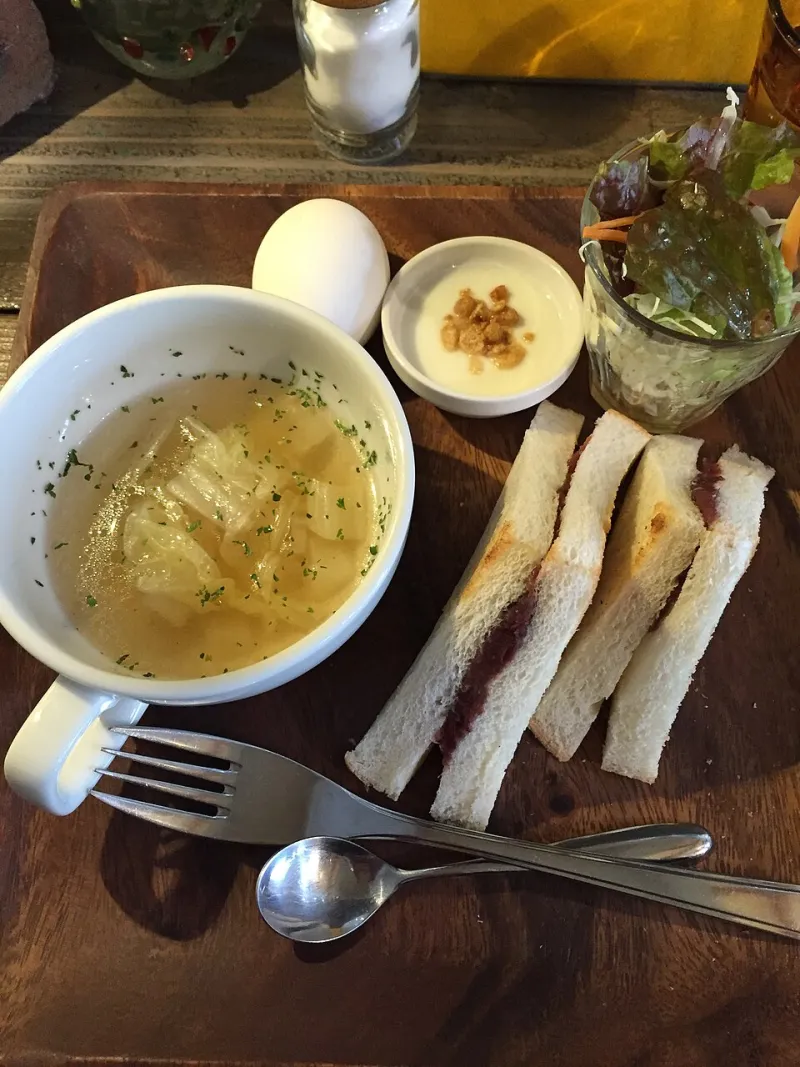
Photo: Yuya Tamai from Gifu, Japan, CC BY 2.0, via Wikimedia Commons
At a certain kind of Japanese café, you do not order breakfast. You order coffee, and breakfast shows up anyway. The coffee arrives first, dark and small. Then comes a plate with a thick slab of toast, a boiled egg, and maybe a few leaves of cabbage or a spoonful of yogurt. It looks like a happy accident. It is actually one of the most quietly efficient breakfast rituals in the world.
What Morning Service Actually Is
In Japan, the phrase is 'morning service' or 'morning set.' The setting is usually a kissaten, the old-school Japanese coffee shop that feels part living room, part time capsule. Order a coffee during the morning window, often before 11 a.m., and the shop throws in a small breakfast set. The word 'service' here does not mean free in the charity sense. It means the house is doing you a kindness, bundling value into the thing you were already going to buy.
The exact plate changes from shop to shop. In Nagoya, the toast might be especially thick, and the set might include a small salad and a dollop of sweet red bean paste. In Tokyo, it might be simpler: toast, egg, maybe a banana. Some cafés offer a choice of toast thickness or a second cup of coffee. The details are local. The logic is universal: give people a reason to sit down, stay a while, and come back tomorrow.
A Short History of Coffee and Toast
Morning service is often traced to postwar Japan, and especially to the café culture that grew up around Nagoya. Coffee shops were competing for regulars in a country where the first coffee of the day was not yet a national habit. Offering a piece of toast or a boiled egg with the coffee was a way to make the purchase feel generous, almost like a small gift. By the 1960s and 1970s, the morning set had become a familiar part of urban café life.
The ritual survived because it solves a real problem. A cup of coffee alone can feel like a pause. A cup of coffee with a tray of small things feels like a morning. You do not need a full English breakfast or a diner plate. You need one warm starch, one protein, a little crunch, and a reason to linger.
Why American Café Culture Is Ready for This
American coffee shops have spent the last several years turning into places where people work, meet, and kill an hour. The coffee is expensive. The pastry case is tempting but often a sugar bomb. Morning service offers a different bargain: a small, savory, complete-feeling meal that makes the coffee purchase feel like the beginning of something rather than a quick transaction.
It also fits the way a lot of Americans are eating in 2026. We are not necessarily looking for a three-course brunch. We are looking for a modest plate that carries us to lunch without a crash. Thick toast, an egg, and a handful of greens is a template that travels well. It is comforting without being heavy. It is familiar without being boring.
And there is something appealing about the format itself. The tray does the work. You do not have to decide between sweet and savory, because the set already decided for you. You do not have to order four things to feel satisfied. The coffee is the anchor. Everything else is a small, pleasant side effect.
Building Your Own Morning Set at Home
The home version should not become a project. If you are boiling eggs, making toast, whisking a dressing, and brewing a special pot of coffee, you have missed the point. The point is a tray that comes together in the time it takes the coffee to finish dripping.
Start with bread. Japanese shokupan is ideal because it is soft, thick, and slightly sweet, but a good Texas toast or a thick-cut country loaf works fine. Toast it until the outside is crisp and the inside is still tender. Butter is optional. Jam is optional. Do not overthink it.
Boil the eggs ahead of time. Keep them in the refrigerator. On the morning you need them, peel one and cut it in half. A pinch of salt is enough. If you want a small salad, use bagged greens or thinly sliced cabbage with a simple dressing: rice vinegar, a little oil, a pinch of sugar, and salt. If you have leftover cucumber or carrot, slice it thin and toss it in.
Add one small extra if you have it. A spoonful of yogurt. A piece of fruit. A few pickles. The tray does not need to be full. It needs to feel complete. Coffee goes in the cup. The tray goes on the table. You sit down. That is the ritual.
The Rules Are Yours to Break
Morning service is not a sacred text. Some Japanese cafés serve a croissant instead of toast. Some serve a hot dog. Some give you a choice of egg preparations. The format is flexible because the idea behind it is flexible: make the first coffee of the day feel like a small occasion.
At Freeman's Shokudo, we are not suggesting you turn your kitchen into a Tokyo kissaten or that you need a special tray, a special bread, or a special coffee cup. We are suggesting that one cup of coffee can carry a whole breakfast if you let it. Thick toast, a boiled egg, a little salad, and ten quiet minutes. That is not a brunch project. That is morning service.