The Rice Ball That Outsmarted the Sandwich: How Onigiri Won the Grab-and-Go War
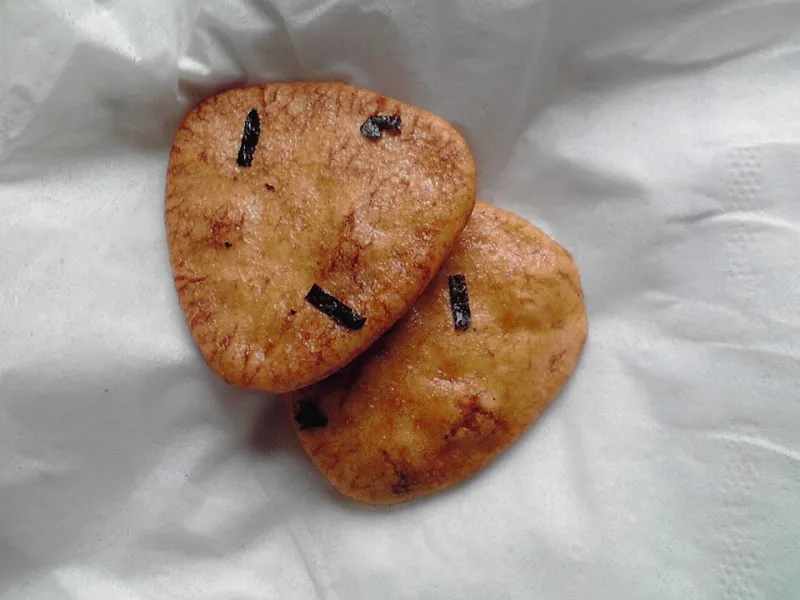
Photo: Miyuki Meinaka, Public domain, via Wikimedia Commons
Walk into any decent grocery store in Los Angeles, Austin, or Brooklyn right now and check the refrigerated case near the checkout. There's a good chance you'll find a triangle of rice wrapped in crisp seaweed, sitting where the sad turkey club used to live. The onigiri has landed, and unlike most food trends that arrive with a marketing budget, this one has been quietly winning for about three hundred years.
At Freeman's Shokudo, we spend a lot of time thinking about food that travels well, and nothing on earth has a better commuter résumé than the rice ball. It's the original hand-held. It requires no utensils, no reheating, and no negotiation with a wrapper that crumbles everywhere. And unlike a sandwich, which starts dying the moment the mayo meets the bread, onigiri is engineered to actually improve its own odds.
The Sandwich Has a Structural Problem
Let's be honest about the desk lunch sandwich. It's a moisture management failure. Build one at 7 a.m. and by noon you're eating a wet sponge with lettuce. Every sandwich veteran knows the workarounds — toast the bread, pack the tomato separately, wrap the whole thing in foil and pray.
Onigiri solves this with packaging, not luck. Traditional shops and Japanese convenience stores wrap the rice in a cleverly folded nori sleeve that stays sealed in its own plastic pocket until the moment you eat. You pull a tab, the seaweed unwraps around the rice, and it's still crackly and crisp. It's the kind of low-key engineering that makes you wonder why your burrito never got the same treatment.
The Ratio Is the Recipe
Ask anyone who's made a mediocre onigiri what went wrong and the answer is almost always proportion. The ideal rice ball is roughly a half-cup of cooked short-grain rice — warm, not hot, and seasoned with nothing more than a pinch of salt on your palms — wrapped around a filling that takes up about a quarter of the volume. More than that and the rice can't hold the architecture. Less and you're eating salted starch with a rumor of salmon.
The rice matters more than the filling. Short-grain Japanese rice, like Calrose or a proper koshihikari if you can find it, has just enough starch to stick to itself without turning to paste. Long-grain rice won't cooperate; it's a structural insubordinate. Cook it a little firm, salt your hands lightly, and shape with a gentle press — compact enough to hold, loose enough to feel like food and not a hockey puck.
Fillings for the American Pantry
The classics — salted salmon, umeboshi pickled plum, tuna with a little mayo — are classics for a reason. But the beauty of onigiri is that it will happily absorb whatever's in your fridge:
- Leftover rotisserie chicken, shredded and mixed with a splash of soy sauce and sriracha
- Canned sardines mashed with a dab of miso, for the brave and the correct
- Everything bagel seasoning stirred straight into the rice, no filling required
- Crispy bacon and scallion, because we're allowed to meet in the middle
Keep a bowl of rice in your cooker from the night before, and morning assembly takes less time than unbagging a bagel.
The 30-Second Morning Method
Here's the whole routine. Wet your hands, rub in a little salt. Scoop a half-cup of rice into your palm, dent the middle with your thumb, drop in a teaspoon of filling, and cap it with more rice. Cup your hands into a triangle and press — gently, twice, rotating as you go. Wrap in a strip of nori. Done. That's it. You just made lunch in less time than it takes your kettle to boil.
Make a batch the night before, wrap each one in plastic, and refrigerate. Twenty seconds in the microwave the next morning brings the rice back to life, and the nori goes on after warming so it stays crisp.
Why It Sticks (Literally and Otherwise)
There's a reason the rice ball outlasted every lunch fad in Japan: it's humble in the best way. It doesn't ask for a fork, a plate, or a plan. It's comfort food that fits in one hand — and honestly, that's a better sales pitch than anything a sandwich ever made.