No Reservation, No Problem: Why the Walk-In Counter Is Where Japanese Food Actually Lives
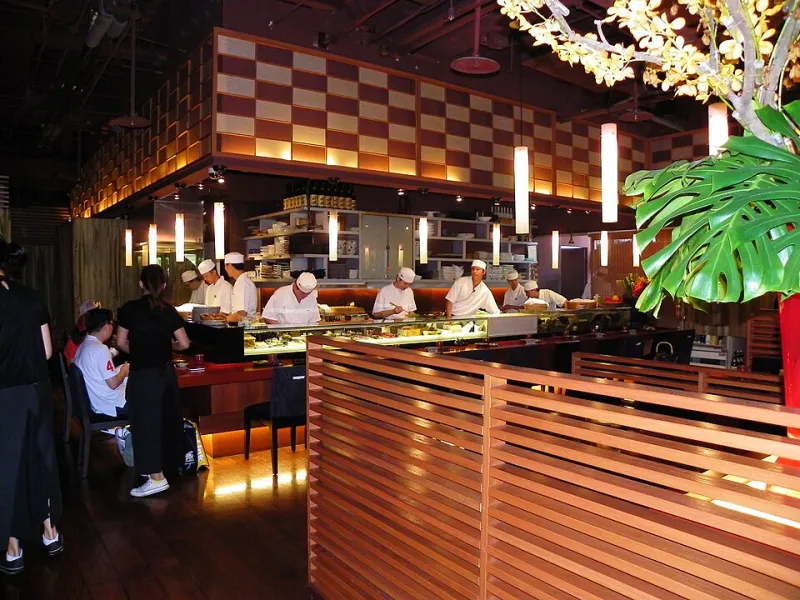
Photo: 玄史生, CC0, via Wikimedia Commons
There's a particular kind of American anxiety that flares up the moment we decide to eat somewhere good. We open the reservation app. We scroll through available slots like we're booking a flight. We take the 5:45 PM Tuesday seating because it's the only one left, and then we spend two weeks waiting for it like it's a dentist appointment.
Japanese restaurants have been quietly running a different experiment this whole time — one built on the radical idea that you should just show up.
The Counter Doesn't Take Bookings (and Doesn't Want To)
Walk into a serious sushi counter or an omakase bar in any major American city and you'll notice something: a chunk of the seating can't be reserved at all. At spots like Sushi Ichimura at the Kinmont in NYC or the no-reservation counters scattered through LA's Sawtelle corridor, the first-come, first-served stools are the whole point. Even heavily booked temples like Chicago's Omakakeena-style rooms often hold seats for walk-ins because the chefs want them.
Why? Because the counter runs on improvisation. A chef looks at the fish that came in that morning, looks at who's sitting in front of him, and adjusts. The couple who wandered in on a rainy Wednesday gets a different, sometimes better, experience than the tasting menu that was locked in six weeks ago. Reservations freeze a meal in amber. Walk-ins keep it alive.
What You're Actually Missing When You Book Ahead
The reservation model assumes dinner is a product you purchase in advance. The walk-in counter assumes it's a conversation. When you sit down without a booking, a few things happen:
- You get the chef's attention, not the itinerary. No pre-ordered menu means the kitchen can steer you toward what's actually best today.
- You're in the room where it happens. Counter dining means watching the knife work, the rice seasoning, the split-second decisions. That's not a sidebar; it's the show.
- Spontaneity lowers the stakes. Nobody spent three weeks anticipating a perfect evening, so there's nothing to be disappointed by. You showed up; dinner shows up.
There's also a humbler truth: the best meals often come from the nights you didn't plan. Anyone who's scored a solo seat at 9 PM on a weeknight knows the particular joy of a meal that almost didn't happen.
The Wait Is Not the Enemy
The number one reason Americans avoid walk-ins is the wait. We treat a 40-minute standby like a punishment. But at a Japanese counter, the wait is the appetizer.
Here's how to flip it:
- Arrive early or late, never on time. Counters quiet down right before the 7 PM rush and again after 8:30. A 6 PM or 9:15 PM walk-in often walks straight to a seat.
- Give the host a number, not a vibe. "Two for the counter, we're flexible" is magic phrasing. Flexibility is the currency.
- Bellies up, drinks out. Find the neighborhood bar a block away and start there. Half the great izakaya nights in New York and Chicago started in the waiting spot.
- Talk to the people waiting with you. Counter culture is communal by design. You might get a menu recommendation, or better, a new friend who insists you join them for round two.
A Modest Proposal: Cancel Something
Look, reservations have their place. If you're taking your parents out for a milestone birthday, book the table. But once a month, do something radical: pick a Japanese spot you've been curious about, check when they open, and just show up.
Wear comfortable shoes. Bring a book or a friend. Put your name in and let the evening unfold without a blueprint. The worst-case scenario is a drink and a plan B. The best-case scenario is a stool at the counter, a chef who just decided what you're eating, and the slow realization that the meal you didn't plan might be the one you remember.
The reservation app will still be there tomorrow. The counter seat won't.