Brick by Brick: How a Melted Curry Block Conquered American Menus One Katsu at a Time
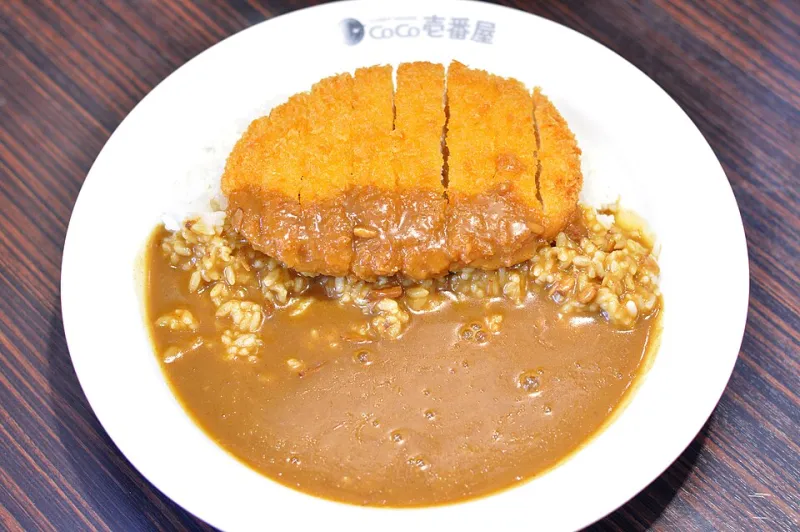
Photo: Ocdp, CC0, via Wikimedia Commons
Somewhere between the ramen boom and the boba takeover, a quieter invasion happened. Scroll the menu of your local Japanese spot — the one with the izakaya vibes and the karaage special — and there it is, listed with almost embarrassing confidence: katsu curry. No adjectives. No explanation. Just the assumption that you already know, because if you know, you know.
Japanese curry has become America's accidental comfort food. Not the curry we set out to adopt, exactly — it's the dish we ordered by mistake on our first trip to a Japanese restaurant, took one bite, and never ordered anything else again.
A Stew With a Passport
Here's the twist most people don't see coming: curry isn't Japanese. Not originally, anyway. It arrived in the late 1800s via the British Royal Navy, whose sailors ate curried stew from ration tins as a standard part of shipboard life. Japan, mid-Meiji modernization and hungry for Western ideas, adopted it through that British filter — which is why Japanese curry tastes nothing like the fragrant, spice-forward curries of India and everything like a rich, spoonable gravy with a passport.
Over the following century, Japan did what it does best: it took a borrowed idea and made it unmistakably its own. The sauce got thicker — thick enough to cling to rice without a single grain escaping. It got sweeter, often with grated apple or honey folded in. It got milder, rounder, more forgiving. And most importantly, it got convenient.
The Brick That Built a Nation's Dinner
In 1950s Osaka, a company called S&B figured out how to press curry sauce into solid blocks — roux bricks that dissolve into a pot of water, meat, and vegetables in about twenty minutes. This was a cultural earthquake disguised as a pantry item. Suddenly, curry wasn't a project. It was a Tuesday.
Ask anyone who grew up in Japan and they'll tell you: curry rice is the smell of coming home. It's the school lunch staple, the camping trip ritual, the thing mom made in a pot big enough to feed the neighborhood. And it's the rare dish that's simultaneously humble enough for a weeknight and beloved enough that chefs will argue about their favorite boxed roux like it's a sports rivalry.
That's the thing about Japanese curry — it lives a double life. At home, it's a box of Vermont brand roux and whatever's in the crisper drawer. At restaurants, it becomes something else entirely: a deep-brown sauce simmered for hours, poured over a shattering-crisp pork cutlet, or ladled around udon noodles like it was always meant to be there.
The Great Roux Taste-Off
We did the unglamorous work so you don't have to. We melted our way through the major supermarket roux brands, and the results were genuinely surprising.
Vermont Sweet (mild) is the gateway drug — apple-sweetened, almost creamy, the one that converts skeptics. Golden Curry (medium-hot) is the workhorse: balanced, slightly bolder, the one most restaurants secretly use as a base. Java Curry is for the heat-seekers who still want that signature sweetness underneath the burn. And for the ambitious, Kokumaro Curry brings a double-dose of roux depth that tastes suspiciously like it simmered all day.
The pro move? Combine two bricks. Half Vermont, half Golden gives you sweetness with backbone. It's the curry equivalent of a house blend, and once you start, you can't stop.
Coast to Coast, the Sauce Spreads
Japanese curry's American takeover is happening in real time, and it's not just at Japanese restaurants anymore. In Los Angeles, dedicated curry houses serve spice-level ladders that go from 'pleasant' to 'sign a waiver.' In New York, you'll find it draped over fries at late-night spots and folded into burger joints' secret menus. Portland, Austin, Chicago — the map keeps filling in.
Even the ramen industry got involved. Curry ramen — that glorious hybrid where the broth and the roux meet — has become a cult order at shops from San Jose to Boston. It shouldn't work. It absolutely works.
And the next wave is already here: katsu sando shops putting curry dip on the side, curry udon showing up on izakaya menus, even curry-flavored snack aisles expanding at H Mart and beyond.
Why It Stuck
Japanese curry wins in America for the same reason mac and cheese wins: it's warm, it's thick, it's spoonable, and it asks nothing of you. It doesn't demand spice tolerance or a spice grinder full of cardamom. It pairs with fried things, noodles, rice, or honestly, a torn piece of bread when nobody's watching.
It's comfort food that got a passport, learned a second language, and came back better than it left. Order it by mistake if you have to. You'll love it anyway.