Small Bowl, Big Feelings: Why Miso Soup Is the Comfort Food America Never Knew It Needed

Photo by Photo by Seiya Maeda on Unsplash on Unsplash
American comfort food has a reputation to uphold. It's supposed to be loud. Creamy mac and cheese that coats the back of a spoon. Beef stew that simmers for six hours and fills the whole house with something that smells like a hug. Chili that layers heat on top of heat. The general rule? If it doesn't feel like a weighted blanket in edible form, it probably doesn't qualify.
And then there's miso soup. A ceramic cup of pale amber broth. A few cubes of soft tofu. A whisper of wakame seaweed. Maybe some sliced green onion floating on top. That's it. No richness, no drama, no slow-cooked depth. Just quiet warmth in a bowl that you can finish in four sips.
So why, exactly, are American diners falling hard for it?
The Broth That Refuses to Shout
Here's the thing about miso soup that trips people up the first time: it doesn't try to impress you. Walk into any Japanese restaurant in the US — from a strip-mall spot in suburban New Jersey to a sleek izakaya in Los Angeles — and miso soup usually arrives as a side, almost as an afterthought. A small vessel alongside your main dish, steam curling upward, asking nothing of you.
That restraint is the whole point. In Japanese food culture, miso soup isn't the star. It's the grounding element, the thing that anchors the meal without overpowering it. The Japanese concept of ichiju sansai — one soup, three sides — places miso soup at the center of a balanced meal not because it dominates, but because it completes.
For American palates trained on bold, layered flavors, this can feel almost disorienting at first. Where's the salt hit? The fat? The complexity? And then, somewhere around the second or third sip, something shifts. The umami from the fermented soybean paste settles in. The warmth spreads. It's not filling, exactly — it's settling. There's a difference.
What We Actually Mean When We Say 'Comfort Food'
Food psychologists have spent a fair amount of time studying why certain dishes make us feel safe. The short version: comfort food is deeply personal and almost always tied to memory, familiarity, and a sense of being cared for. In the US, that often translates to calorie-dense, texturally rich foods — think mashed potatoes, grilled cheese, fried chicken. Foods that feel substantial.
But researchers have also noted that comfort isn't exclusively about abundance. Warm liquids, in particular, have a physiological calming effect. There's a reason chicken soup shows up in nearly every food culture on earth as a remedy for everything from a cold to a broken heart. The warmth is part of the medicine.
Miso soup fits squarely into that second category. It's not comforting because it's heavy — it's comforting because it's warm, consistent, and uncomplicated. In a food landscape increasingly defined by overstimulation (sriracha on everything, seven-layer dips, triple-smash burgers), miso soup offers something genuinely rare: a moment of stillness.
How Freeman's Thinks About the Bowl
At Freeman's Shokudo, miso soup isn't just a menu item — it's a philosophy statement. The idea of Japanese comfort meeting American appetite means honoring both sides of that equation, and miso soup sits right at the intersection. It's familiar enough (warm broth, simple ingredients) to feel approachable, and different enough to gently recalibrate expectations.
Chef-owner conversations here often circle back to the same observation: American diners who are skeptical of miso soup at first almost always come back to it. The first bowl might feel underwhelming. The third bowl feels necessary.
"There's a recalibration that happens," one of our kitchen leads explained during a recent menu discussion. "Once you've had miso soup a few times, your palate starts to recognize what it's doing. It's not trying to be the loudest thing on the table. It's trying to make everything else taste better."
That's a harder sell in a culture that tends to reward the loudest flavor in the room. But it's also exactly why it works as a kind of antidote. After a week of takeout, drive-throughs, and oversalted everything, a bowl of clean, fermented broth tastes like a reset button.
The Fermentation Factor
It's worth pausing on what miso actually is, because the ingredient itself is doing a lot of quiet work. Miso paste is made from fermented soybeans — sometimes mixed with rice or barley — and the fermentation process produces that signature depth of flavor that food people call umami. It's savory without being meaty, rich without being heavy, and complex in a way that sneaks up on you.
For American diners who've become fluent in the language of fermented foods through the craft beer boom, the sourdough revival, and the ongoing kimchi moment, miso isn't actually that foreign a concept. It's just fermentation applied to soup. And once that frame clicks into place, the whole thing starts to make a lot more sense.
Different types of miso — white (shiro), red (aka), and mixed (awase) — each bring distinct personalities to the bowl. Shiro miso is mild and slightly sweet, a good entry point for newcomers. Aka miso is bolder and more intensely savory, closer to what American diners might instinctively recognize as "comfort." Most restaurants, including the approach at Freeman's, use awase, blending both for a balanced middle ground.
Why Simple Isn't the Same as Easy
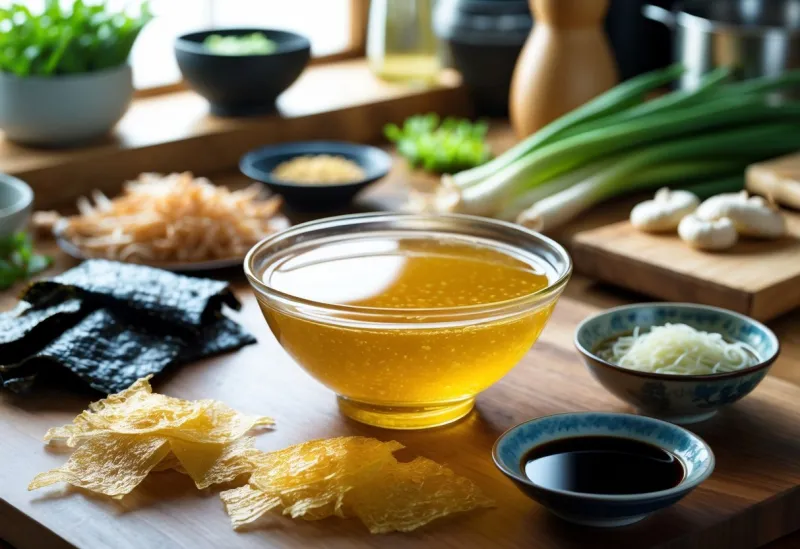
One of the most common misconceptions about miso soup is that its simplicity makes it easy to get right. It doesn't. Because there are so few ingredients, every element matters. The dashi — the base stock made from kombu seaweed and bonito flakes — needs to be properly made. The miso paste should never be boiled after it's added, or the live cultures die and the flavor flattens. The tofu should be silken, not firm. The timing of the wakame matters.
This is actually part of what makes miso soup quietly radical as a comfort food. It demands attention. Not the long, slow attention of a six-hour braise, but a focused, present kind of care. You have to be paying attention to make it well. And in a weird way, that meditative quality transfers to the act of eating it.
The Quiet Convert
The American relationship with miso soup is still evolving, but the trajectory is clear. It shows up in unexpected places now — hotel breakfast buffets, college dining halls, meal kit subscriptions. Instant miso packets have become pantry staples for a generation of home cooks who want something warm and satisfying without a lot of effort.
But the real magic happens when you sit down to a properly made bowl. Not the instant stuff, not the afterthought side — the real thing, made with care and served at the right temperature. That's when the paradox resolves itself. This simple, quiet, minimal bowl isn't breaking the rules of comfort food. It's just operating on a different frequency.
And once you tune in, it's hard to tune back out.